Am I a Conservative? A Tour Through My Own Views (and Why the Label Feels Off)
Not left, not right—just anchored
Introduction
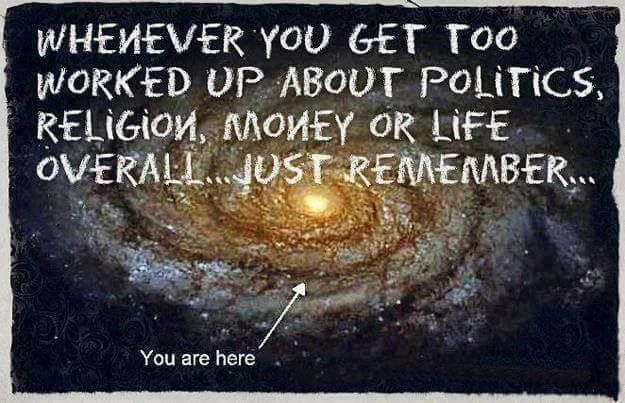
Every so often, you look at your own opinions and realize they don’t stack neatly into the political boxes people want you to live in.
I’ve had that moment plenty of times.
On one hand, I’m pro–free speech, pro–Second Amendment, pro–America First, skeptical of equity (when it means quotas), convinced that boys shouldn’t compete against girls in sports, and I’m blunt about immigration: illegal aliens are here unlawfully and the country has every right to enforce its borders. I also support police and think we should keep adult themes away from young kids.
On the other hand, I’m pro-choice. I don’t care who anyone sleeps with or marries. I believe in separation of church and state. I want enforcement to be humane. I want well-trained, professional policing—not brutality, not incompetence, not immunity from consequences.
So what does that make me?
The short version is: I don’t fit the caricature of a modern “conservative,” and I don’t fit the caricature of a modern “liberal” either.
The longer version is this blog.
What “Conservative” Even Means Anymore
If you look at political philosophy instead of cable-news slogans, conservatism is usually described as a preference for established institutions, social stability, and gradual change over radical redesign. It’s skeptical of utopian claims and wary of tearing things down faster than we can rebuild them.
That basic instinct resonates with me.
I don’t trust social engineering—especially the kind that demands you deny plain reality, rewrite language, and punish dissent. I don’t trust movements that say, “Give us power and we’ll fix human nature.” Human nature doesn’t get fixed. It gets managed—by culture, law, family, norms, and consequences.
But conservatism in American life is also a coalition. And coalitions come with “packages.” If you disagree with one plank, you get treated like you’re not allowed in the room.
That’s the trap: people confuse “your tribe” with “your philosophy.”
So instead of starting with a label, I think it’s more honest to start with the principles underneath the views.
A Better Way to Sort This: Two Instincts That Run My Politics
Most of my positions come from two instincts that I don’t apologize for:
- Liberty is real, and government power is dangerous.
This overlaps with the liberal tradition in the original sense: a presumption in favor of liberty and the idea that coercion must be justified, not assumed.
- Reality is real, and culture matters.
This overlaps with a conservative temperament: stability, boundaries, and skepticism of ideological experiments.
That combination—liberty plus realism—often looks like a mix of classical liberalism and conservatism. In American terms, it’s not unusual; it’s basically the tension that has always existed inside the broader right-of-center coalition.
Some political thinkers even named that mix. “Fusionism” is one attempt to describe a coalition that merges libertarian emphasis on freedom with conservative emphasis on tradition and social order.
Whether you like that word or not, it describes the internal wiring: don’t micromanage adult lives, don’t lie about biology, don’t punish speech, don’t dissolve borders, don’t replace equal rules with identity-based spoils.
Now let’s walk through the views I listed, one by one, and see what they actually point to.
Pro-Choice: The Issue That Breaks the “Clean” Label
I’m pro-choice. That alone makes some people say, “Then you’re not conservative.”
But here’s what’s true: there’s no single global definition of conservatism that automatically dictates one view on abortion. Conservatism is a broad family of ideas about tradition, institutions, and limits—not one policy.
My pro-choice stance isn’t about celebrating abortion. It’s about the reality that pregnancy is bodily, medical, and deeply personal—and once you set the precedent that the state can force people through intimate physical outcomes, you’ve given government a terrifying kind of authority.
You can still value life, still dislike abortion morally, still wish it were rare, and still be unwilling to let the state treat women like public property. You can also believe that criminalizing it doesn’t magically make the underlying human situations disappear—it just pushes them into darker, more dangerous corners.
If someone wants to argue that the unborn deserve legal protection, that argument exists. But it’s not the only “serious” argument. And it’s not the only argument that can be made in good faith.
So yes: pro-choice makes me an awkward fit inside some conservative circles. But it doesn’t automatically eject me from every conservative principle I hold.
I Don’t Care Who Anyone Sleeps With or Marries: Adult Liberty, Not Social Policing
This one is easy.
Consenting adults can live however they want. If two adults want to marry, that’s their business. If two adults want a relationship that I wouldn’t choose, that’s their business.
That’s not “left wing.” That’s liberty.
It aligns strongly with the idea that coercion should be limited, and that the default setting of a free society is “leave people alone unless there’s harm.” That way of thinking sits naturally inside philosophical liberalism and libertarianism.
But there’s a second point people ignore: you can be socially tolerant and still be culturally strict about kids. Those are two separate conversations, and I refuse to let them be collapsed into one.
Free Speech: The Pressure Valve of a Free Country
Free speech is non-negotiable for me. Not because I think every idea is equally good, but because the alternative is worse.
Once you normalize punishing speech—especially “wrong” or “harmful” speech—who defines wrong? Who defines harm? Who gets the enforcement tools?
And historically, it’s always the powerful that end up holding the microphone and the gag.
The First Amendment is blunt for a reason: it protects expression, even ugly expression, because the country was founded by people who understood what it means to have authorities decide what you’re allowed to say.
If we can’t speak freely, we can’t correct errors. We can’t expose corruption. We can’t debate. We can’t even define reality without permission.
That’s not a “right” issue. That’s a civilization issue.
The Second Amendment: Not a Hobby, a Boundary
I support the Second Amendment.
Part of it is practical: self-defense matters, and police aren’t everywhere. But the deeper part is philosophical: an armed citizenry is a boundary. It’s a reminder that the state is not the owner of the people.
You can support safety measures, training, and responsibility while still rejecting the underlying dream some people have: a disarmed public governed by permanent experts.
Rights don’t matter when they’re convenient. They matter when they’re inconvenient. That’s the whole point.
Equal Opportunity, Not Equity: Rules Versus Rigging
I believe in equal opportunity, not equity—especially when equity turns into quotas for skin color, gender, or ethnicity.
Equality is the idea that people should have the same rules and the same access to opportunity. Equity, as commonly defined in modern institutions, is about adjusting resources or rules to reach equal outcomes.
That sounds compassionate. Sometimes it is. But there’s a poison pill in the outcome-driven version of equity: it trains society to judge people primarily as members of categories, and it turns politics into a constant fight over who gets adjusted up and who gets adjusted down.
Once you make “equal outcomes” the goal, you have to manage outcomes. And once you manage outcomes, you have to manage human choices. That’s not freedom. That’s social management with a moral vocabulary.
I’m not against helping people. I’m against replacing merit and equal rules with identity arithmetic.
Two Genders, and Fairness in Sports: Reality, Not Slogans
I believe there are only two genders.
People can describe themselves however they want. Adults can live however they want. But I’m not willing to pretend biology is a social construction. And I’m not willing to let institutions demand that everyone publicly recite a metaphysical belief as a condition of employment, education, or basic participation in society.
Where this becomes more than a philosophical debate is sports.
I believe boys should not compete with girls in sports.
That’s not animus. That’s fairness. Sex-based performance differences widen around puberty, closely tied to testosterone-driven changes in male physiology. The scientific and sports-policy debate is complicated and politically radioactive, but even mainstream sports bodies acknowledge that male puberty confers advantages relevant to speed, strength, and power.
If girls are told, “Your category is open to anyone who declares it,” then the category is no longer protected. And women’s sports exist precisely because the categories matter.
Here’s the line I draw: treat people with basic decency, don’t bully people, don’t dehumanize anyone—but don’t erase women’s spaces and call it progress.
Immigration: A Nation Is Allowed to Have Borders
My views on immigration are straightforward:
- Immigration should be restricted and orderly.
- Immigrants should learn our language, learn our culture, and leave old allegiances behind.
- Illegal immigration is not acceptable.
- Illegal aliens should be returned, but the process should be humane.
- And I use the term illegal aliens—no euphemisms—because “alien” is literally the legal term in U.S. immigration law for a non-citizen/non-national.
A country isn’t a charity with no membership. It’s a nation with citizens, laws, obligations, and a shared civic identity. You can be kind and still enforce borders. You can treat people humanely and still insist on legality.
The modern rhetorical game is to make enforcement sound inherently hateful. I reject that. Border enforcement is not hate. Law is not hate. The word “illegal” means something.
That said, I also reject cruelty. “Humane return” is not weakness—it’s moral seriousness. A country should be strong enough to enforce its laws without becoming sadistic in the process.
America First: Priority, Not Hatred
America First is one of those phrases that instantly triggers people, mostly because they hear it as “America only” or “America above all morality.”
That’s not what I mean.
I mean this: the U.S. government’s primary duty is to American citizens. Period.
If you can’t say that out loud, you’re not governing a nation—you’re managing an NGO with a military.
You can be decent to outsiders. You can help allies. You can trade with the world. But policy should be built on the premise that the people paying the bills and living with the consequences come first.
That instinct is conservative-coded today, but it’s also the most basic premise of national sovereignty.
Police: Support the Mission, Raise the Standard
I support the police because I support law, order, and the protection of the innocent. When policing collapses, the vulnerable suffer first. The wealthy can buy gates, guards, and distance. Regular people can’t.
But I also want police to be well trained and humane.
Those two beliefs go together. If you respect a profession, you demand competence. If you support legitimate authority, you insist it be exercised with discipline.
A pro-police stance that refuses accountability isn’t pro-police. It’s pro-tribe. It’s how institutions rot from the inside: “We protect our own no matter what.” That poisons the public and puts good officers at risk, because the public stops trusting the badge.
So my view is: support police, train police, pay police well, demand professionalism, and remove the people who can’t meet the standard.
Keeping Adult Themes Away From Kids: Boundaries Are Not Oppression
I believe many adult themes should be kept from young kids.
That shouldn’t be controversial. But here we are.
Childhood is not a stage for ideological experimentation.
Kids are not miniature adults.
They’re developing—emotionally, cognitively, sexually, socially—and they deserve a protected space to grow without being pulled into adult conflicts.
This isn’t about banning books or banning ideas broadly. It’s about age-appropriate boundaries, parental authority, and the basic truth that not everything is suitable for every stage of development.
A society that can’t say “not for kids” is a society that has lost the plot.
Separation of Church and State: Keep Government Clean, Keep Faith Clean
I believe in separation of church and state.
Not because I hate religion. Not because I want to erase faith from public life. But because the fusion of government and religion tends to corrupt both.
In U.S. constitutional terms, the First Amendment begins by prohibiting laws “respecting an establishment of religion,” while also protecting free exercise. The separation doctrine is commonly linked to that Establishment Clause idea: government cannot establish an official religion or unduly favor one.
Practically, here’s what that means for me:
- You can be religious.
- You can vote with your conscience.
- You can speak your beliefs openly.
- But the state should not become a church, and the church should not become a state.
Once politicians weaponize religion, faith turns into a tool. Once the state starts picking winners in religion, it becomes a referee for theology. Neither ends well.
So, Am I a Conservative?
If conservatism is defined as a preference for stability, tradition, and gradual change—and skepticism of radical redesign—then yes, a lot of my worldview is conservative.
But if “conservative” is used as a tribal badge that requires lockstep positions on every social and moral issue, then no, I’m not that.
My positions point to something more specific:
- I’m liberty-forward on adult life.
- I’m boundary-forward on kids.
- I’m reality-forward on biology and sports.
- I’m rule-of-law forward on immigration and crime.
- I’m Constitution-forward on speech, religion, and firearms.
- I’m nation-forward on priorities.
If someone needs a label, they can call it constitutional conservative, or classical liberal with a spine, or fusionist, or just a citizen who refuses to be bullied by slogans.
But the label is the least important part.
The important part is whether the views hang together without hypocrisy.
And I think mine do.
What Holds It All Together: One Simple Test
Here’s the test I use when I’m trying to figure out if I actually believe what I say I believe:
- Does this principle apply when it’s inconvenient?
Free speech has to protect speech you dislike, or it’s not free speech.
Equal opportunity has to apply even when outcomes look uneven, or it’s just quota politics.
Women’s sports have to remain protected even when the conversation gets uncomfortable, or they’ll be erased by nice-sounding language.
Borders have to be enforceable even when the stories are sad, or you don’t actually have a border.
Humane enforcement has to remain humane even when people are angry, or you don’t actually have morality.
Separation of church and state has to apply even when your side wants to “use” religion, or it’s just power in a halo.
If you can pass that test across issues, you’re not drifting with a tribe. You’re thinking.
Why This Matters
If you outsource your political identity to a label, you end up defending people you don’t know and policies you haven’t thought through—just because they wear your “team” colors.
That’s how smart people become mouthpieces.
A better approach is to build your views from first principles:
- What do you value most—liberty, order, fairness, stability, truth?
- Where do you draw lines—between adults and kids, between compassion and enabling, between inclusion and fairness?
- What role should government play—and what role should it never be trusted with?
When you do that, the label becomes optional. And your views become harder to manipulate.
References
Encyclopaedia Britannica. (n.d.). Conservatism.
Encyclopaedia Britannica. (n.d.). Conservatism: Intellectual roots (Burke and gradualism).
Courtland, S. D. (1996). Liberalism. Stanford Encyclopedia of Philosophy.
Carter, I. (2003). Positive and negative liberty. Stanford Encyclopedia of Philosophy.
van der Vossen, B. (2002). Libertarianism. Stanford Encyclopedia of Philosophy.
U.S. House of Representatives, Office of the Law Revision Counsel. (n.d.). 8 U.S.C. § 1101(a)(3) (Definition of “alien”).
Legal Information Institute, Cornell Law School. (n.d.). Alien (definition).
Library of Congress. (n.d.). U.S. Constitution: First Amendment (text).
National Archives. (n.d.). Bill of Rights transcript (Amendment I text; ratified 1791).
Legal Information Institute, Cornell Law School. (n.d.). Separation of church and state.
Legal Information Institute, Cornell Law School. (n.d.). Establishment Clause.
George Washington University. (2020). Equity vs. equality: What’s the difference?
American College of Sports Medicine. (2023). The biological basis of sex differences in athletic performance.
Handelsman, D. J., et al. (2017). Sex differences in athletic performance emerge at puberty.
Joyner, M. J., et al. (2025). Evidence on sex differences in sports performance.
Liberty Fund. (2021). Liberty and virtue: Frank Meyer’s fusionism.
Science Magazine. (2023). World Athletics ban and the science debate on male puberty advantage in women’s sport.
Disclaimer
The views expressed in this post are opinions of the author for educational and commentary purposes only. They are not statements of fact about any individual or organization, and should not be construed as legal, medical, or financial advice. References to public figures and institutions are based on publicly available sources cited in the article. Any resemblance beyond these references is coincidental.