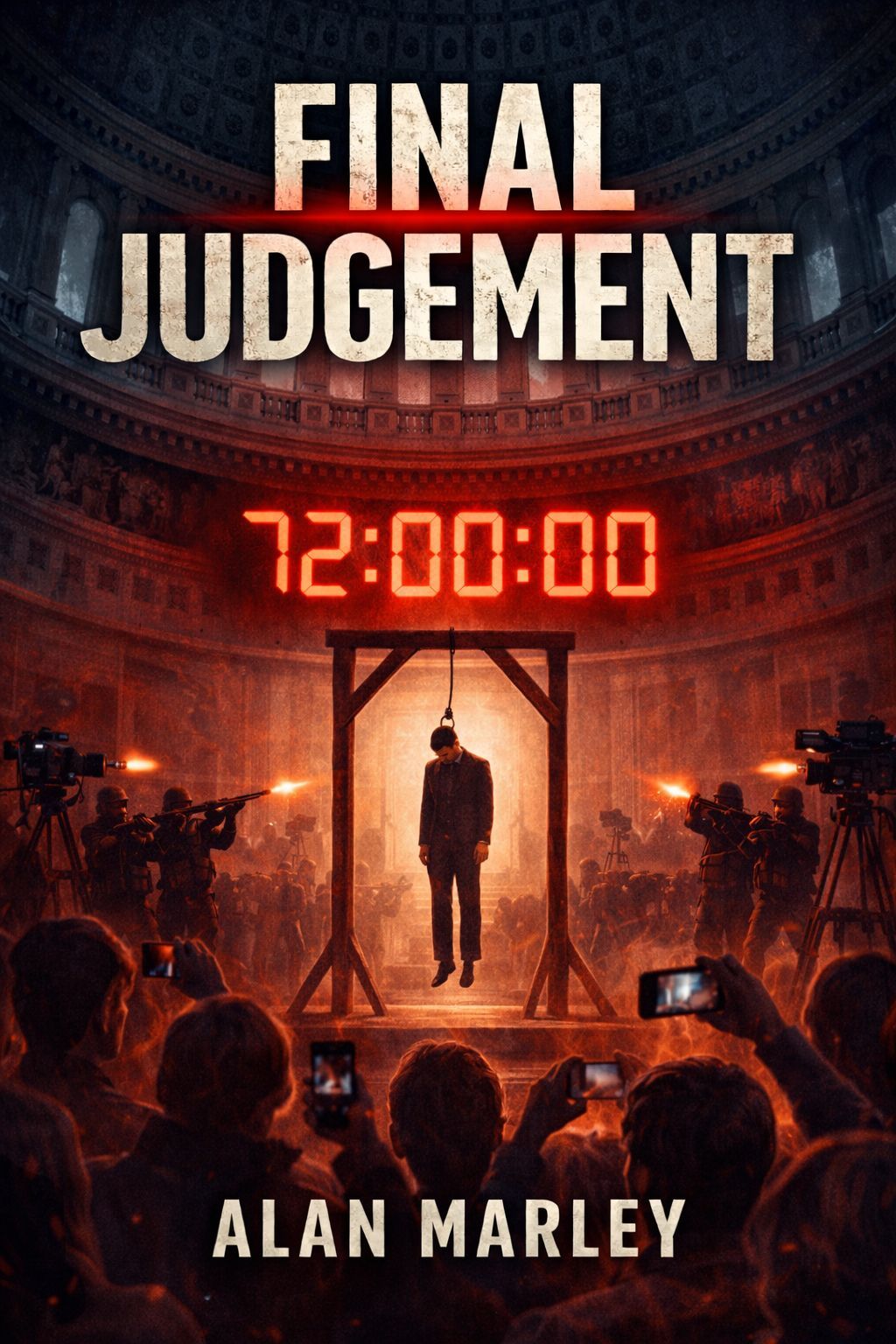
Every country says it wants justice. Very few are honest about what they mean by it. Some mean fairness. Some mean safety. And some mean something older and hungrier that wears justice as a costume. Final Judgement is a novel about what happens when those three things get poured into the same law and handed a camera.
The book is out now on Kindle and in paperback. It is Book One of the Justice District Series. I want to tell you where it came from and why I think it matters right now.
The Anger Is Real
I will start where the book starts. With the families.
Most of us have seen some version of the story. A man with a record gets out early. A case collapses on a procedural ruling. A mother sits in a courtroom and listens to lawyers use words like guidelines and safeguards while the person who killed her child walks out the side door. Then the cameras leave and she is alone with it.
That anger is not stupid. It is not mob hysteria. It is what happens when people watch a system protect the wrong person and then ask them to be patient about it. Any honest book about crime and punishment has to take that seriously first. So mine does.
Angela Ruiz is the heart of the novel. Her fourteen-year-old daughter Marisol was murdered. The killer walked on a suppressed confession. Angela did everything right and still lost. When a senator stands up and promises it will never happen to another family, she drives through the night to stand beside him. I did not write her as a fool. I wrote her as the most reasonable person in the room.
The Law
The law in the book is called the Victim's Execution Option Act. Trials run on a seventy-two hour public countdown clock from arrest to verdict. The victim's family chooses the method of execution. And the sentence is carried out on live television with sponsors.
On paper every piece of it sounds like accountability. Speed sounds like justice delayed no longer. Family choice sounds like dignity for victims. Broadcasting sounds like transparency. That is exactly why it works. Nobody in the book votes for a spectacle. They vote for fairness. The spectacle shows up on its own.
Within months there is a Justice District built around the execution chamber. There are burger joints and souvenir windows. There is a beer called Last Breath Lager. There is a child-sized T-shirt in a gift shop that says MY FIRST EXECUTION. Readers will laugh at some of it. Then they will stop laughing, because none of it requires anybody to be evil. It only requires people to keep showing up.
The Question Underneath
The book is not really asking whether the death penalty is right. Smart people have argued that for centuries and they will keep arguing it after I am gone. The question I care about is harder. What happens to a society when punishment becomes entertainment? What happens to the grieving when their grief becomes a brand? And who gets rich while everyone else is watching the clock?
I have spent a lot of time writing commentary about institutions that protect themselves instead of the people they serve. Fiction let me do something commentary cannot. It let me put the reader in the gallery. You do not read about the countdown. You sit under it. You watch a clock hit zero and you feel what the room feels. Then you have to decide whether you like what you felt.
Who You Will Meet
Senator Eli Carmichael is the man who writes the law and believes every word of it, at least at first. Marcus Redford is a former federal judge who spent thirty years believing the law was the best tool humanity ever built and now has to watch it become a business. An anonymous group starts publishing the names of the executed who may have been innocent, and the country does not want to hear it.
And then there is David Lerner. He is the most respected reporter covering the story. He has built his name exposing the machine. He has also been watching Angela since the first day in the Capitol. I will not tell you why. That is the part of the book that keeps going long after the last clock stops, and it is where Book Two picks up.
Somewhere in Texas there is also a woman nobody is looking for. She is counting the days. Pay attention to her.
Why I Wrote It
I have been a Marine, a builder and a teacher. Every one of those jobs teaches the same lesson in a different accent. Rules exist to protect people from what other people want in the moment. When the rules fail, the answer is not to tear them down and replace them with appetite. That trade always feels like justice on the first day. By the third day it feels like something else.
Final Judgement is that third day. It is a thriller first. It moves fast and it does not apologize. But I wrote it because I think we are closer to the Justice District than most people want to admit. Not because of one law. Because of how easily outrage turns into an audience.
Final Judgement by Alan Marley. Book One of the Justice District Series. Political thriller. Available now on Kindle and in paperback. Free to read with Kindle Unlimited where enrolled.
Content note: the novel contains depictions of violence and references to violent and sexual crimes. There are no explicit sexual scenes.
Get it on AmazonIf you read it, leave a review. For an independent author that matters more than any ad. And if it makes you angry in the right places, tell somebody about it. That is how books like this find their readers.
The clock is already running.