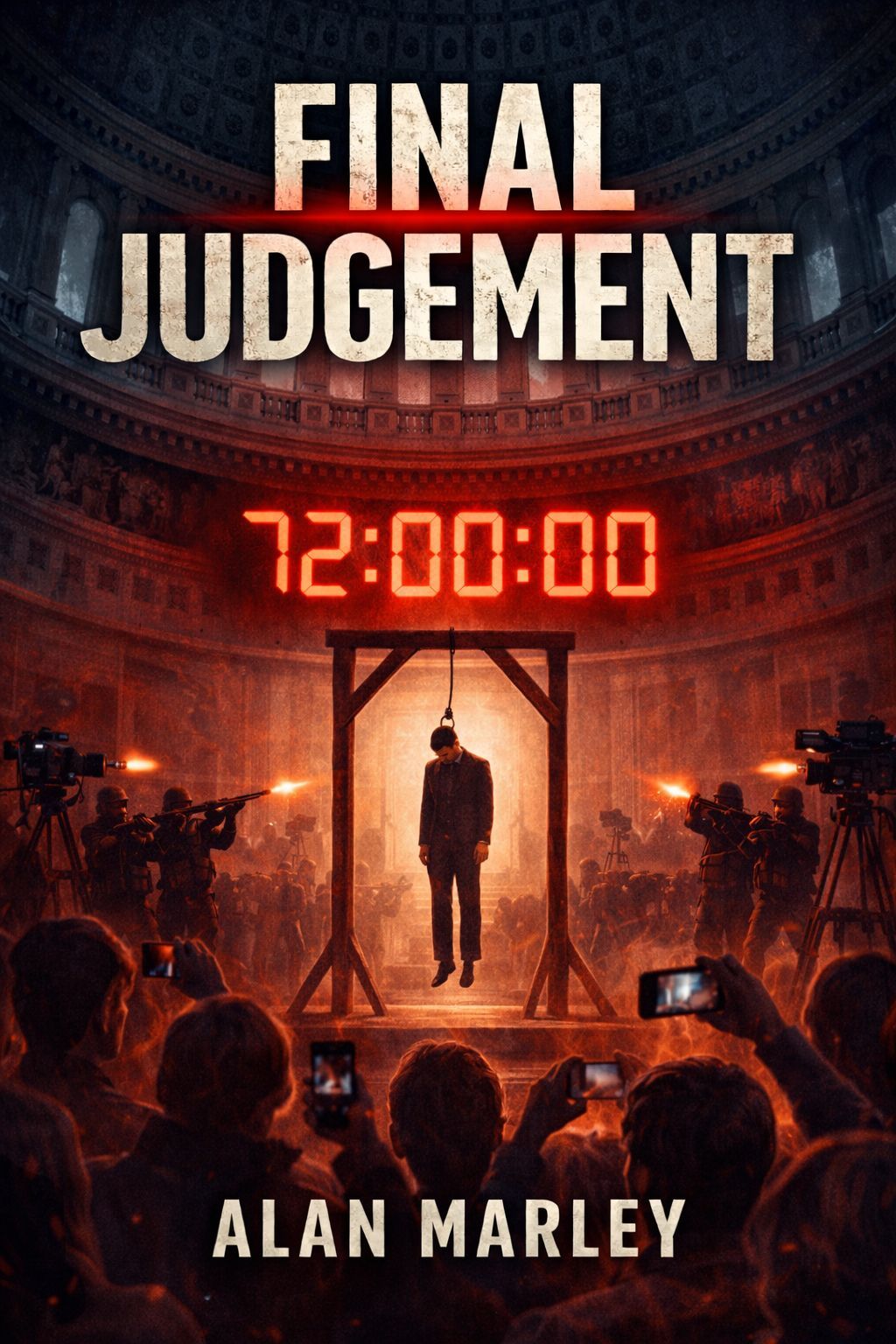
Power does not forgive impatience. The Caesars of Rome learned it the hard way. They seized or inherited enormous authority, and the ambitious ones found that remaking institutions faster than a society could swallow the change breeds enemies faster than it breeds reform.
Donald Trump just got his reminder.
On November 3, 2026, Democrats took both chambers of Congress. [1, 2] Republicans lost, and they lost badly. I will not dress that up.
Now watch what the winners do with it. Because the party that just won is not a party at all. It is a coalition of people who agree on one thing, and the one thing is not a program. It is a man.
The Caesar Problem: Too Much, Too Fast
Trump came back with an appetite. He wanted to move fast, tear down established policy, confront every institution and reshape the world in months. There is a case for decisiveness. Washington has spent decades perfecting the art of talking while doing nothing.
But decisiveness is not a barrage. Trump never learned the difference. The bombast and the personal attacks were never a secret. Voters knew what they were buying in 2024. Knowing what you are buying and being satisfied with it a year later are two different things, and plenty of voters who liked the goals got tired of the methods.
Trump is an elected president in a republic, not an emperor. The lesson still holds. Power used without regard for public patience produces opposition faster than it produces lasting change. Tuesday night was that bill coming due.
Johnson and Thune: The Failure Behind the Failure
This was not Trump alone.
Mike Johnson and John Thune ran Republican majorities through a consequential stretch and delivered no independent, disciplined legislative leadership. Congress is a coequal branch. It is not the White House mailroom. A real leadership team turns a president’s goals into law, negotiates, sets priorities and tells the boss something he does not want to hear. These two did not.
Republicans held Congress and the White House and could not show voters they knew how to govern. Voters worried about prices and the direction of the country rendered their verdict. A Democratic Congress takes office in January 2027.
The Victory Hides the Rot
Now the part nobody on the winning side wants to say aloud.
Democrats won by uniting everyone who opposed the incumbent. That is not a governing philosophy. It is a mood, and moods do not write budgets.
The party is four movements wearing one jersey.
The establishment. Institutional politicians, party officials, donors and conventional liberals who want incremental change on the old terms. Schumer and Jeffries live here.
The progressives. They want aggressive government on healthcare, taxes, climate, housing and inequality, and they believe the establishment has compromised too much for too little.
The democratic socialists and the activist left. Overlapping with the progressives but angrier. They want structural change and they challenge incumbents in primaries to get it.
The moderates. Members from swing districts and red states whose survival depends on refusing the positions that thrill activists.
Try holding that together. Can a moderate from a conservative state vote for a democratic socialist’s economics? Can the activist left swallow gradualism? Can the establishment keep control while insurgents knock on the door? And can a coalition glued together by hatred of Trump survive the day it has to negotiate with him?
It cannot all be true at once. Something breaks.
Jeffries and Schumer: Gavels Without Spines
Here is what the party will not tell you. The two men holding the gavels are not leaders in any sense that matters.
Hakeem Jeffries and Chuck Schumer are much maligned, and most of it is earned. The Hill is already reporting that new Senate winners are vowing to reject Schumer as leader. [3] That is not a man commanding his caucus. That is a man being measured for a drop cloth. Jeffries is weak-kneed in the way that matters, which is that he manages a caucus by asking it nicely. Both men look like caretakers waiting for somebody else to take over.
Supporters will point to the win. Fine. A tide lifts every boat, and the tide this year was an unpopular president and a country tired of him. Winning in that tide shows the water was high, not that the captain can steer. The test comes now, with a majority to manage and no shared enemy to hide behind.
They are no Nancy Pelosi. Pelosi counted votes and held a caucus together by making members fear and respect her at once. You can despise her politics and still admit she ran the room. Jeffries and Schumer do not run the room. The room will run them.
Some Democrats will demand investigations. Others will demand impeachment. Progressives will push sweeping legislation. Moderates will cling to their seats. The 2028 hopefuls will play to their own audiences. Jeffries and Schumer will spend more time negotiating with their own members than with the president, and they will lose most of those negotiations. Parties do not break over the opposition. They break over what victory is for. These two will be consumed by their own factions, and it will not take two years.
Parties do not break over the opposition. They break over what victory is for.
Trump Is Not Going Anywhere
Trump is still president.
Democrats can run the calendar, open investigations, block bills and use the Senate to choke off nominations. Those powers are real, and Republicans are fools if they underestimate them. But Democrats cannot legislate at will. Trump keeps the veto, and overriding a veto takes two-thirds of both chambers. [4] The election did not end his presidency. It changed the terms.
That leaves room for deals, and dealmaking is the one thing Trump has always done better than the people who hold him in contempt. If Democrats cannot agree among themselves, he will cut deals with whichever faction will sign. Or the two sides will spend two years snarling at each other. Both are possible. What is not possible is a Democratic Congress that does whatever it wants.
The Investigation Trap
Democrats will investigate. They should. Oversight is legitimate, and credible evidence of wrongdoing deserves a hearing no matter who sits in the Oval Office.
But they ran on prices, jobs and a country that felt out of control. If voters get two years of subpoenas, hearings and impeachment theater instead of lower costs, they will notice. There is a difference between accountability and a show. Republicans have not always known it. Democrats will have to prove they do, and with this leadership I would not bet on it.
The Morning-After Problem
There is a vulgar American expression for the feeling that follows a bad decision: coyote ugly. You wake up so desperate to leave that you would chew off your own arm before waking the person next to you.
A lot of voters will feel a political version of it. Not because they miss Trump. Because voting against something feels far better than living with what replaces it. People voted Democratic because groceries cost too much, because they are tired of Trump’s personality, because they wanted a check on the executive. That is not a signature on every progressive bill, every activist demand and every subpoena.
The same applies to Republicans. A vote for Trump was never a blank check for everything he said afterward. Elections produce winners. They do not produce agreement. And buyer’s remorse is as American as it gets.
Victory Is Not Governing
Democrats now have two years to show what their win means beyond hating Donald Trump. They must reconcile four factions, write a program, manage a president and explain themselves before 2028. They will do it under leaders who cannot hold a caucus.
Republicans must decide whether voters rejected their goals or their methods. Trump must decide whether to change his approach or keep acting as though nothing happened. Divided government delivers compromise, stalemate or both.
The Caesars learned that taking power and keeping the support to use it are different jobs. Trump has been reminded. Democrats are next.
And somewhere in America there will be a voter waking up on a Wednesday morning, looking at the company he kept the night before and wondering whether chewing off an arm might have been the easier way out.
The election is over. The consequences are just beginning.
- NBC News. (2026). Democrats capture full control of Congress, NBC News projects, fueled by victories in deeply Republican states. nbcnews.com
- NPR. (2026, November 3). 2026 election: Democrats win full control of Congress. npr.org
- The Hill. (2026). New Senate winners vow to reject Schumer as Democratic leader. thehill.com
- U.S. Constitution, art. I, § 7, cl. 2 (presidential veto and congressional override by two-thirds of each house).