AI Won’t Ruin Writing. Bad Writing Ruins Writing.
The real risks are copyright, laziness, and sameness — not the existence of a tool.
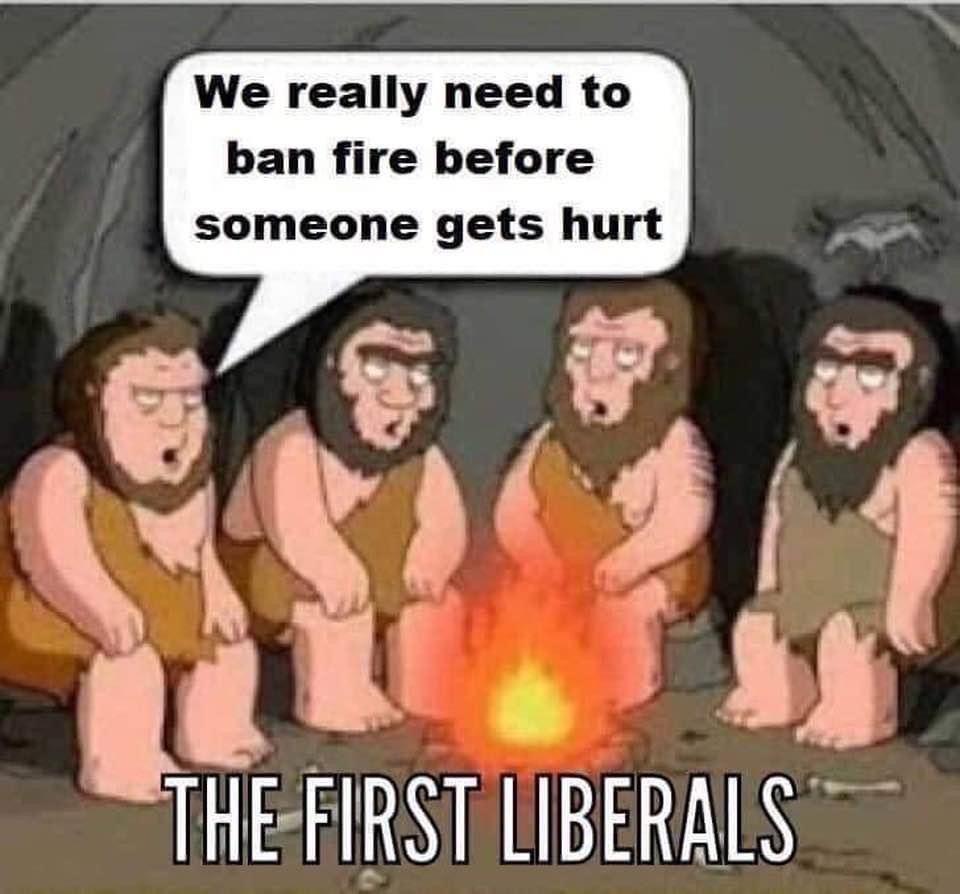
INTRODUCTION: THE SAME PANIC, A NEW DECADE
Every time a new tool shows up, someone announces the end of the craft.
Typewriters “killed” handwriting.
Word processors “killed” real authors.
Spellcheck “killed” literacy.
Google “killed” memory.
And now AI is “killing writing.”
Same movie. New villain.
Here’s the truth: AI can absolutely make writing worse — if you use it like a slot machine. But used correctly, it’s closer to having a fast junior assistant + a rough-draft engine + a relentless editor. Tools don’t erase craft. They raise the baseline and move the battlefield.
The question isn’t “Will AI ruin writers?”
The question is “Will writers adapt, or will they pretend the world stopped in 1997?”
WHAT PEOPLE ARE ACTUALLY WORRIED ABOUT (AND WHY SOME OF IT IS LEGIT)
- The flood of cheap, low-effort content
Yes — AI makes it easy to produce endless bland sludge. That’s a real problem. It can swamp platforms, bury good work, and train audiences to accept mediocrity.
But notice what that is: a distribution and incentives problem, not a “writing is dead” problem. The internet already rewarded volume over quality long before AI showed up.
- Copyright and training data
This is the biggest real issue — and it’s not “writers being dramatic.” A lot of creators argue their work was used to train models without permission or compensation, and there’s a growing legal/policy fight around that.
That’s not anti-tech. That’s basic property rights and fair dealing.
- Authenticity and trust
Readers don’t like being lied to. If someone markets “my personal story” and it’s machine-generated mush, people feel conned. That doesn’t mean AI can’t be used — it means don’t fake human intimacy you didn’t actually create. - Skill atrophy
If you outsource everything, your brain gets soft. That’s true with GPS, calculators, and yes, writing tools. If you never wrestle with structure, voice, and rhythm, you won’t develop them.
But again: that’s a user problem, not a tool problem.
- Job displacement
There will be displacement in commoditized writing: basic SEO filler, low-end marketing copy, generic emails, boilerplate product descriptions. That’s real. The solution isn’t denial — it’s moving up the value chain: voice, expertise, reporting, narrative, judgment, taste, and accountability.
AI ISN’T “STEALING” IN THE WAY PEOPLE MEAN IT
A lot of the outrage uses the word stealing to mean “a machine copied my paragraph and pasted it somewhere else.”
That’s usually not what’s happening when someone uses AI to draft a blog post.
Plagiarism is taking someone’s words (or close paraphrase) and presenting them as your own. That is theft of credit. AI-assisted writing is not automatically that. Most of the time, the model is generating new phrasing from patterns, not copy-pasting a source.
Could AI ever spit out something too close to an existing passage? Yes — it can, especially in edge cases or when prompted in a way that tries to “recreate” specific text. Even OpenAI describes memorization/regurgitation as a rare failure mode and says it works to limit it.
So the honest position looks like this:
- Using AI to help you write isn’t inherently stealing.
- Forcing AI to mimic, reproduce, or “rewrite this article” without attribution can become plagiarism fast.
- Training-data disputes are a separate debate from whether your final blog post is plagiarized.
AI can be used ethically or unethically — just like a human writer can.
WHAT AI IS GOOD FOR (WHEN YOU’RE NOT USING IT LIKE A MORON)
- Draft speed and momentum
AI can increase productivity and improve output quality in writing tasks, especially for people who struggle to get started. - Editing and tightening
This is where AI shines if you already have a voice:
- spot repetition
- propose cleaner sentence options
- tighten rambling paragraphs
- suggest headings and transitions
- flag tone drift
That’s not “cheating.” That’s what editors do every day.
- Structure and outlining
A lot of writers don’t fail because they can’t write sentences. They fail because they can’t organize thoughts. AI is strong at generating frameworks: section order, argument flow, counterpoints, and summaries. - Brainstorming without ego
You can ask for 30 headlines, 20 hooks, 10 analogies, 5 ways to say the same thing, and you won’t hurt anyone’s feelings by rejecting them. - Accessibility and translation
Used responsibly, it can help non-native speakers and people with limited time communicate more clearly, while keeping human accountability central.
THE REAL DANGER: HOMOGENIZATION
The most honest critique of AI writing is that it tends to average everything out. It’s “safe.” It’s smooth. It’s polite. It’s often dead inside.
So if you let it drive, you get:
- generic voice
- predictable cadence
- sterile phrasing
- corporate blandness
- the same ten metaphors everybody else used this week
That’s why the winning move is simple: use AI like a tool, not like an author.
HOW PLAGIARISM TOOLS CAN INDEPENDENTLY VET ORIGINALITY
Here’s the part critics ignore: if someone is worried AI “stole” content, you can run independent similarity checks to see whether your text overlaps existing sources.
These tools don’t read your mind and declare you innocent. They do something more useful: they compare your writing against large databases and flag matching passages, so you can fix them.
Examples of how the tools describe what they do:
- Turnitin: it compares your submission against its databases and produces a similarity report; it explicitly notes it doesn’t “check for plagiarism,” it highlights matching text so a human can evaluate it.
- iThenticate/Crossref Similarity Check: used by publishers and journals to detect text overlap (possible plagiarism) via similarity reporting.
- Grammarly’s plagiarism checker: cross-references text against large web and academic databases and flags matching sentences with sources.
Also worth noting: independent research comparing these tools suggests some do a better job than others at detecting overlap in AI-assisted writing contexts.
A simple “AI-safe” workflow for writers:
- Draft (with or without AI)
- Do a human edit for voice and clarity
- Run a similarity check
- Rewrite any flagged blocks that are too close
- Add citations where you’re using facts, claims, or someone else’s framing
- Final pass for tone and originality
That’s not defensive. That’s professional.
“EXECUTION AND CRAFTSMANSHIP” STILL MATTER — TOOLS JUST MOVE THE LINE
People love to say, “Ideas are cheap. Execution is everything.”
True… and also incomplete.
Tools change what execution looks like. They always have. AI raises the floor. It doesn’t eliminate the ceiling.
The writers who win won’t be the ones who refuse the tool.
They’ll be the ones who keep their voice, keep standards, and use the tool to move faster without surrendering authorship.
WHY THIS MATTERS
If you’re a writer, your job was never to be a human typewriter.
Your job is to say something real, clearly, with force.
AI is not the enemy of that mission. Laziness is. Dishonesty is. And a content ecosystem that rewards volume over value is.
Used correctly, AI gives serious writers leverage: faster drafting, tighter editing, better structure — plus the ability to independently verify originality with similarity tools before publishing. That’s how you enhance writing instead of cheapening it.
REFERENCES
Noy, S., & Zhang, W. (2023). Experimental evidence on the productivity effects of generative artificial intelligence. Science.
UNESCO. (2023). Guidance for generative AI in education and research.
OpenAI. (2024). OpenAI and journalism (discussion of memorization/regurgitation risk and safeguards).
U.S. Copyright Office. (2025). Copyright and Artificial Intelligence, Part 3: Generative AI Training (pre-publication version).
Turnitin. (2025). Understanding the similarity score / Similarity Report overview (similarity is matching text; used as part of human review).
iThenticate. (2024–2025). The Similarity Report / Understanding the Similarity Report (comparison against web, publications, submissions).
Crossref. Similarity Check (powered by iThenticate; used to detect text overlap).
Grammarly. Plagiarism checker (cross-referencing against large web/academic databases).
Anil, A., et al. (2023). Are paid tools worth the cost? A prospective cross-over study comparing plagiarism detection tools.
Disclaimer:
The views expressed in this post are opinions of the author for educational and commentary purposes only. They are not statements of fact about any individual or organization, and should not be construed as legal, medical, or financial advice. References to public figures and institutions are based on publicly available sources cited in the article. Any resemblance beyond these references is coincidental.